
Today, Mincing Lane is best known for the love-it-or-hate-it Minster Building. For much of the 19th and 20th centuries, however, it was known as "the Street of Tea".
Mincing Lane played a crucial role in Britain's tea story. For much of the 19th and 20th centuries, this short street in the City of London stood at the heart of the international tea trade. Merchants, brokers and buyers gathered here to inspect samples, negotiate prices and follow news from tea-growing regions thousands of miles away.
Today, most people walk through Mincing Lane without realising that it once played such an important role in Britain's favourite drink.
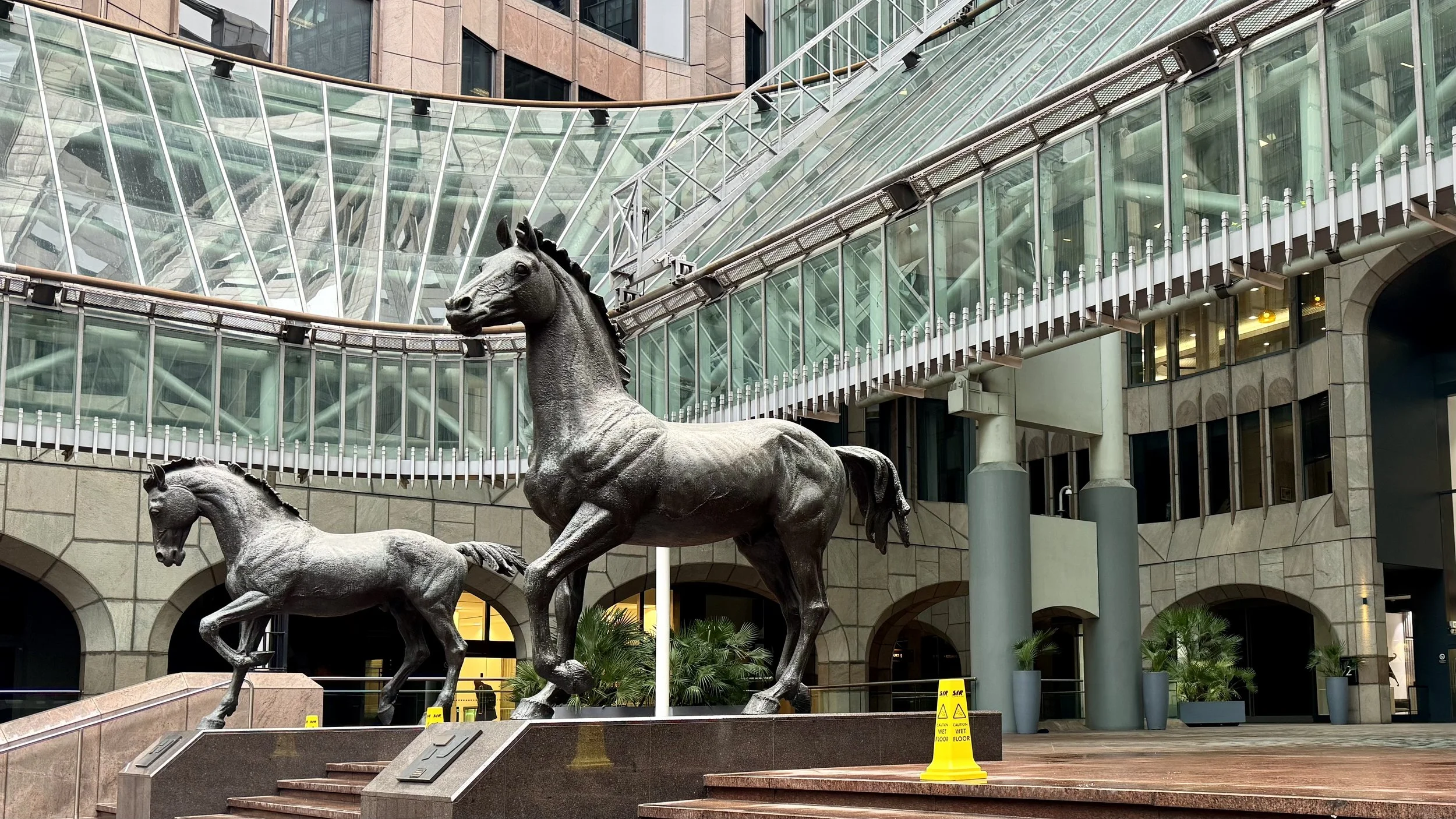
Horse statues outside the Minster Building, Mincing Lane
How Tea Came to Mincing Lane
Tea auctions had been held in London since the 17th century, originally under the control of the East India Company at East India House in Leadenhall Street.
The trade changed in 1834 when the Company's commercial monopoly came to an end. Tea became a free-trade commodity and the auctions moved to the London Commercial Salerooms in Mincing Lane. Before long, tea merchants established offices nearby and the street became synonymous with the trade itself.
If you worked in tea, this was where business was done.
Feeding Britain's Tea Habit
The move coincided with a period when tea was becoming an everyday drink rather than a luxury.
Imports rose steadily throughout the 19th century as tea became more affordable. By 1900, the average person in Britain consumed more than 6lb of tea each year. Supplying that demand required a vast commercial network stretching from tea plantations overseas to warehouses, brokers and retailers in London.
For a time, the City handled an astonishing proportion of the world's tea trade.
The Rhythm of the Auctions
The auctions developed their own weekly routine. Mondays and Wednesdays were devoted to Indian teas. Tuesdays focused on Ceylon, while Thursdays were reserved for Chinese, Javanese and other varieties.
Before bidding began, tea had to be assessed. Specialist tea tasters examined the dry leaf, inspected the infused leaf and tasted multiple samples in quick succession. Their role was not simply to decide whether a tea was pleasant, but to judge its quality, consistency and likely value. A skilled taster could detect subtle differences between shipments from different regions or estates. Their opinions carried considerable weight and could influence the prices paid at auction.
Tea brokers had a reputation of their own, too. According to The Grocer, sugar men were generally more jovial, while tea brokers were quieter and noticeably neater in their dress.
From Mincing Lane to Tesco
Mincing Lane's influence extended far beyond the tea merchants who worked there. One of the most famous connections is with Jack Cohen, the founder of Tesco. In the years after the First World War, Cohen was building a business from market stalls in London's East End. Looking for products to sell, he bought tea from T. E. Stockwell, a merchant associated with Mincing Lane.
The tea was sold under a new brand name. Cohen combined the first three letters of Stockwell's surname with the first two letters of his own to create "Tesco". From a tea deal connected to the Street of Tea grew one of Britain's largest retailers.

Tesco store, Unsplash
The End of an Era
Tea trading remained closely associated with the City well into the 20th century. The auctions moved to Plantation House on Mincing Lane before relocating to Sir John Lyon House in 1971. Their final home was the London Chamber of Commerce, and the final London tea auction took place in 1998.
The merchants and auctioneers have long since gone, but Mincing Lane's place in tea history remains secure. For more than a century, this unassuming City street helped shape the way Britain bought, sold and drank tea.
Want to discover more of London's tea story? The Tea Trail explores the people, places and hidden histories behind one of the City's most influential trades.
Part of the Tea Trail Series
Continue exploring London's fascinating tea history: