
Today, sipping tea feels as British as standing in line or complaining about the weather. In the 1650s, however, most Londoners had never tasted it.
One of the people who helped change that was Thomas Garraway. From his coffee house in Exchange Alley, close to the Royal Exchange, he sold tea both as a drink and as loose leaves for customers to prepare at home.
A plaque on the site today marks the location of Garraway's coffee house. Curiously, it says nothing about tea, even though Garraway is remembered as one of the City's earliest tea merchants.
Garraway was selling tea by 1657, when it was still a rare and expensive import. Convincing people to try it was not necessarily straightforward. Most Londoners had little idea what tea was, let alone why they should pay for it. Garraway's solution was simple: tell them how good it was.
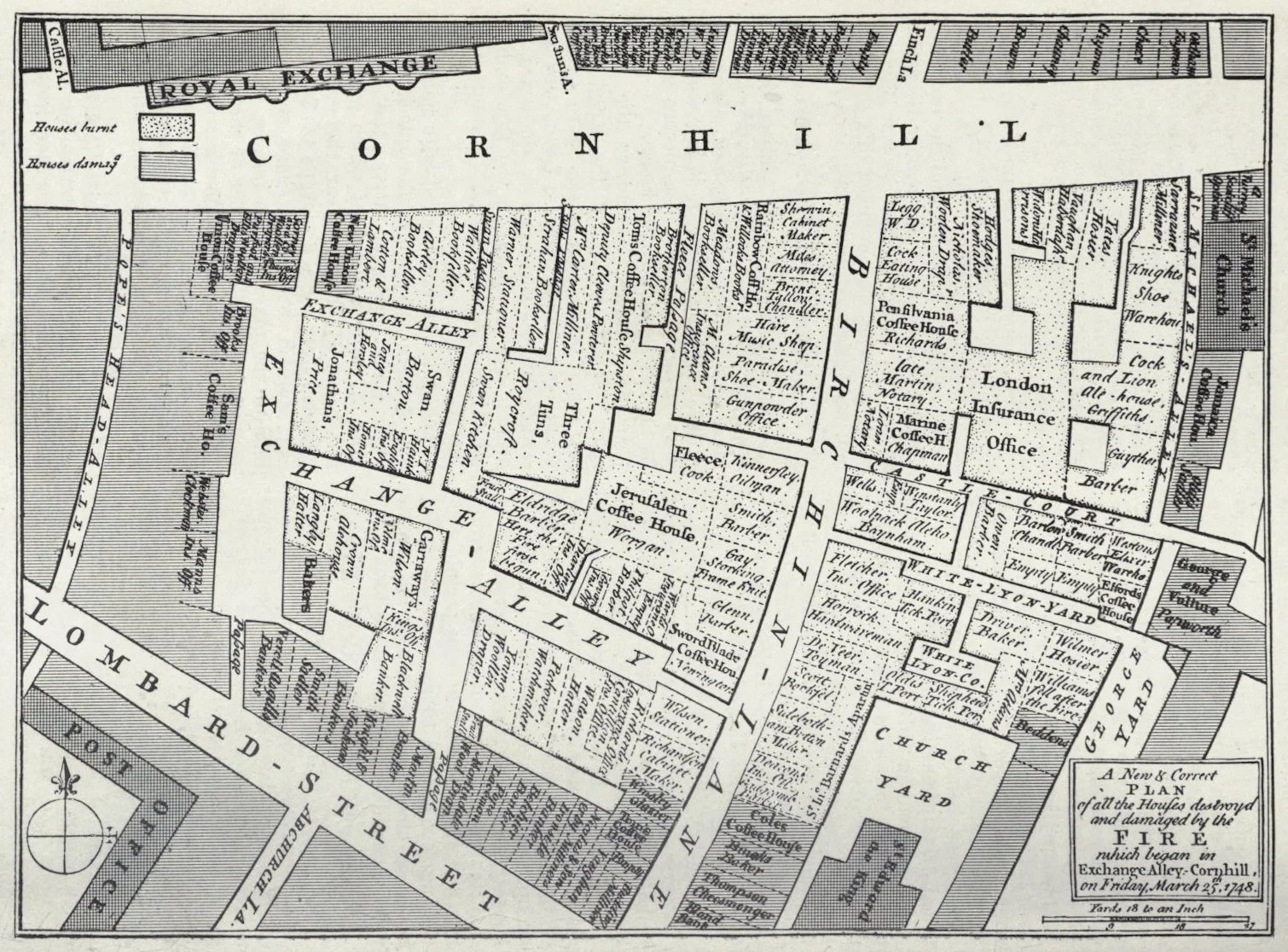
Map of old London coffee houses before the fire of 1748
Image sourced from the Public Domain Image Archive / Internet Archive / University of Toronto Libraries
Tea and Its "Vertues"
In the 1660s, Garraway published a broadsheet with the wonderfully confident title An Exact Description of the Growth, Quality and Vertues of the Leaf TEA.
According to Garraway, tea offered an impressive range of benefits. It could, he claimed, "removeth the obstructions of the spleen" and "taketh away the difficulty of breathing, opening obstructions".
He also assured readers that tea "prevents and cures agues, surfets and feavers".
Modern doctors might take a more cautious view, but Garraway was hardly alone in making such claims. New drinks were often promoted for their supposed medicinal properties.
Coffee received similar treatment. In the 1650s, Pasqua Rosée, who established London's first coffee house, advertised coffee as a remedy for a remarkable range of ailments, including dropsy. Against that backdrop, Garraway's claims for tea may not have seemed especially extraordinary to his customers.
Whether customers were persuaded by the health benefits or simply curious to try something new, the drink gradually gained popularity.
Exchange Alley and the Coffee Houses
Garraway's coffee house stood in Exchange Alley, one of the City's busiest commercial districts. The area was packed with merchants, traders and coffee houses. News travelled quickly, business was conducted over cups of coffee and London's commercial life unfolded at a rapid pace.
It was an ideal place to introduce a new product. Customers could sample tea for themselves, purchase leaves to take away and decide whether Garraway's claims had any merit. The coffee house became one of several places where Londoners encountered tea during its early years in Britain.
Selling More Than Tea
What makes Garraway interesting is not that he discovered tea or introduced it to Britain. Others had encountered the drink before him. Instead, he helped make tea understandable to Londoners.
Today, we take tea for granted. In the 17th century it was an unfamiliar import from the other side of the world. Garraway recognised that before people would buy tea, they needed to know what it was, how to prepare it and why it was worth trying. His broadsheet was part advertisement, part instruction manual and part medical endorsement.
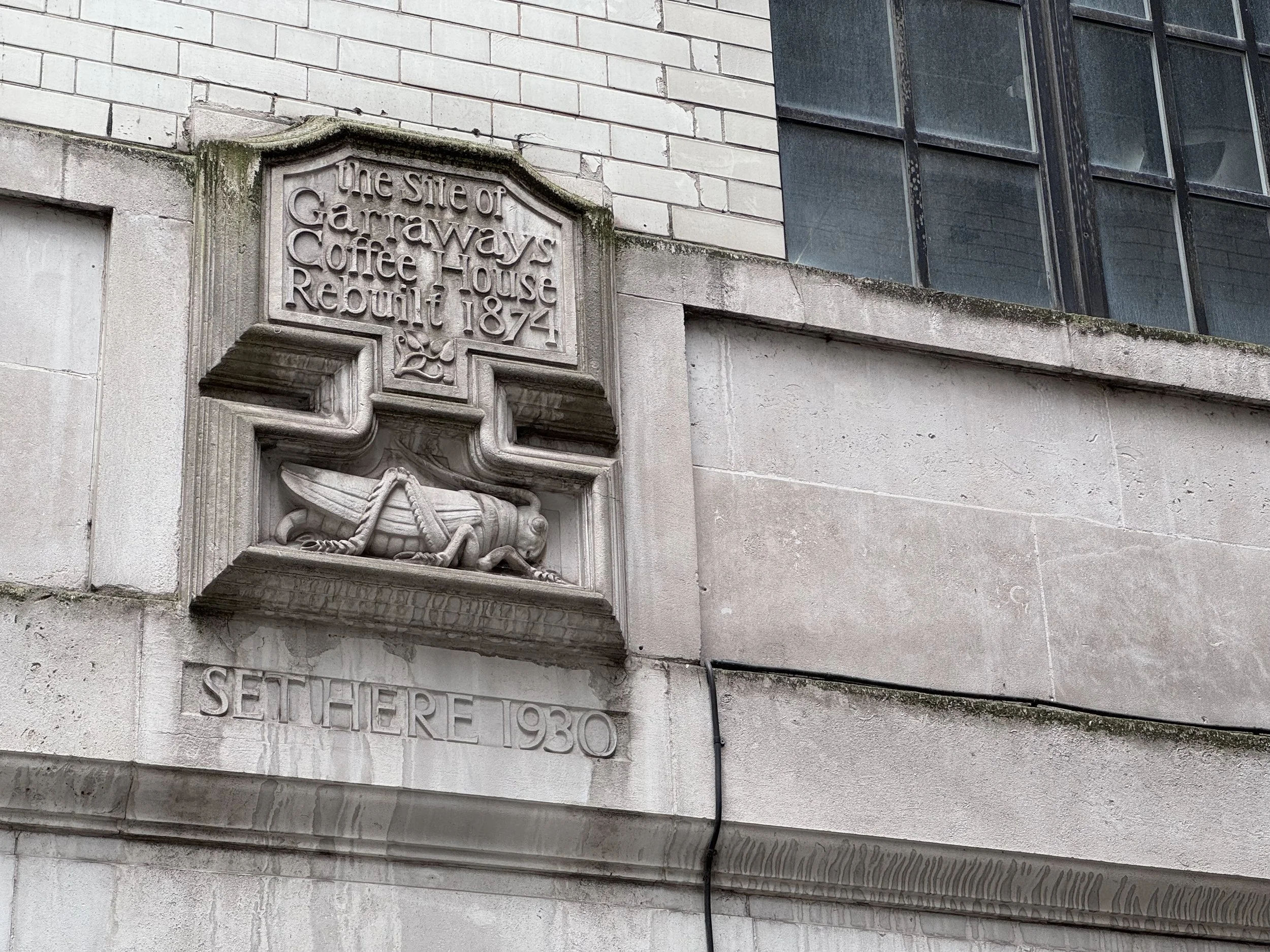
Plaque at the site of Garraway’s Coffee House, Exchange Alley
A Lasting Legacy
More than 350 years later, tea remains woven into British life. Few people passing through Exchange Alley realise that one of London's earliest tea merchants once traded there.
The plaque marking Garraway's coffee house tells only part of the story. Behind it lies the history of a man who helped introduce Londoners to a drink that would eventually become Britain's favourite.
The next time you make a cup of tea, spare a thought for Thomas Garraway. Long before tea auctions, tea warehouses and the Street of Tea, he was helping curious Londoners discover an unfamiliar new drink.
Want to discover more of London's tea story? Read our History of Tea in London guide or explore the Tea Trail to uncover the City's connections to Britain's national drink.
Part of the Tea Trail Series
Continue exploring London's fascinating tea history: